
The EOS study ‘European Payment Practices 2025’ shows that:
- Declining payment discipline is harming companies.
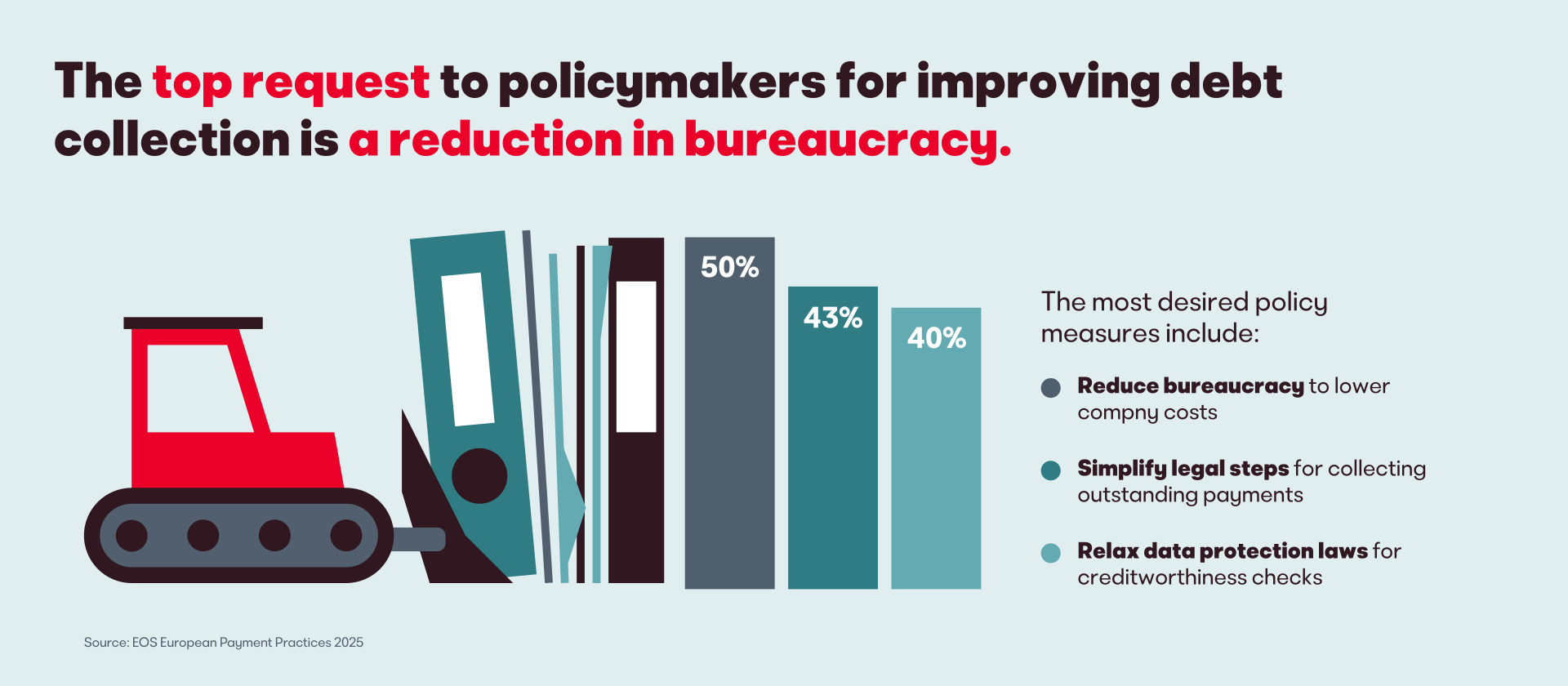
- One in two companies is calling for relief through reduced bureaucracy.
- 43 per cent are demanding effective legal tools for collecting outstanding payments.
- More stringent EU directives are expected to help address this issue.
Due to the declining payment discipline of private and business customers, European companies are increasingly calling for stronger support from policymakers. According to the current EOS study ‘European Payment Practices 2025’, which surveyed 2,200 financial decision-makers from eleven European countries, one in two companies (50 per cent) is demanding a reduction in bureaucratic hurdles. The second most common request is for simpler legal options to more effectively collect outstanding payments (43 per cent). Third is the desire to ease data protection regulations to facilitate credit checks (40 per cent), closely followed by stricter rules on maximum payment terms (39 per cent). The demand for bureaucracy reduction is particularly strong in Germany (62 per cent) and weakest in Switzerland (42 per cent).

Payment defaults are at an all-time high in Europe. The heavy bureaucratic burden is further weakening companies.
The pressure on policymakers is high: currently, about a quarter of all invoices in Europe are paid late or not at all. Due to poor payment discipline, nearly half of European companies have experienced profit losses and higher financing costs in the past, while 34 per cent have faced liquidity shortages. One in five firms reported that late or missing payments have led to a decline in investments. Every sixth company has even felt its very existence was threatened.

As part of the debt collection industry, we support regulations that protect consumers and promote sustainable development. At the same time, we are concerned about how the flood of regulations at all levels of government is stifling innovation and economic growth and unnecessarily restricting companies’ ability to act.
"Payment defaults are at an all-time high in Europe. The heavy bureaucratic burden is further weakening companies. Reducing regulations is essential for European businesses to remain competitive internationally and to manage future investments”, says Marwin Ramcke, CEO of the EOS Group. This view is shared by Georg Kovacs, Board Member and Treasurer of the Federation of European National Collection Associations (FENCA) and President of the Association of Commercial Debt Management (AMCC): “As part of the debt collection industry, we support regulations that protect consumers and foster sustainable development. At the same time, we are concerned that the flood of regulations at all levels of government is stifling innovation and economic growth and unnecessarily limiting companies’ ability to act.”
About the EOS study ‘European Payment Practices 2025’
The survey was conducted between March 27 and May 14, 2025, with the support of the independent market research institute kantar via online and telephone interviews. A total of 2,200 financial decision-makers from companies in eleven European countries were surveyed (200 per country).

Would you like to learn more about the current EOS study? Feel free to get in touch.

Carina Bonde
Corporate Communications & Marketing
Phone: + 49 173 2979331
Explore more from EOS